If you have ever felt like you "get it" in the moment but blank on test day, you are not alone. This guide unpacks What if the question is the study method—and answering it too soon throws the practice away? in depth — what it means, where learners get stuck, and how to turn the visuals into durable memory.
The figures are not decorations. Each one highlights a piece of the story. Read the sections in order, pause after each image, and try explaining the idea without looking back. That small habit is the difference between familiar and truly learned.
Why Turn notes into questions matters
Short-form content is great for discovery, but exams and real projects reward depth. When you only recognize a term, you can spot it on a page yet fail to use it in a new question. Breaking the topic into parts — definition, why it works, what breaks — gives you hooks your brain can retrieve under pressure.
Teachers and self-directed learners benefit for the same reason: you can align a five-minute review with a twenty-minute study block. The goal is not more reading time; it is better structured reading time.
Core ideas to understand
Start with vocabulary. Write one sentence in your own words for each bold term or label in the visuals related to Turn notes into questions. If you cannot write the sentence, you have found your first review target.
Next, connect ideas. Ask: what causes what? What would change if one variable increased? Many mistakes come from memorizing labels without understanding relationships — the figures are meant to show those relationships, not replace explanation.
Common mistakes and how to fix them
- Re-reading only — Feels productive but weakens recall. Fix: close the notes and answer three questions you make yourself.
- Skipping the hard slide — The confusing frame is often the exam frame. Fix: spend your first extra minute there, not on what you already know.
- No timed practice — Real tests have clocks. Fix: after learning, run a short quiz under a gentle time limit.
A simple study routine that works
Use a three-pass loop: (1) read one section and summarize in two sentences, (2) cover the figure and list every label from memory, (3) answer practice questions without notes. Space the passes across at least two days when you can — spacing beats cramming for retention.
When you are ready to test yourself on Turn notes into questions, switch formats. Questions force retrieval; highlighting does not. Even ten well-chosen questions reveal gaps a second read would hide.
Key takeaways
- Treat each figure as a prompt for recall, not a substitute for explanation.
- Define terms, map relationships, then practice under light time pressure.
- Space short reviews; one focused block beats an hour of passive scrolling.
Practice with Quizflex AI
Quizflex AI turns your PDFs, notes, and topics into quizzes and flashcards so you rehearse the same ideas in a different format — ideal after working through the figures above.
Related: Blog home · Pricing · AI quiz generator
Try this in Quizflex AI
Copy the prompt below and paste it into Quizflex AI to generate a practice quiz from this article.
Create a practice quiz to help me study this topic.

Topic: Turn notes into questions

Key ideas from the article:
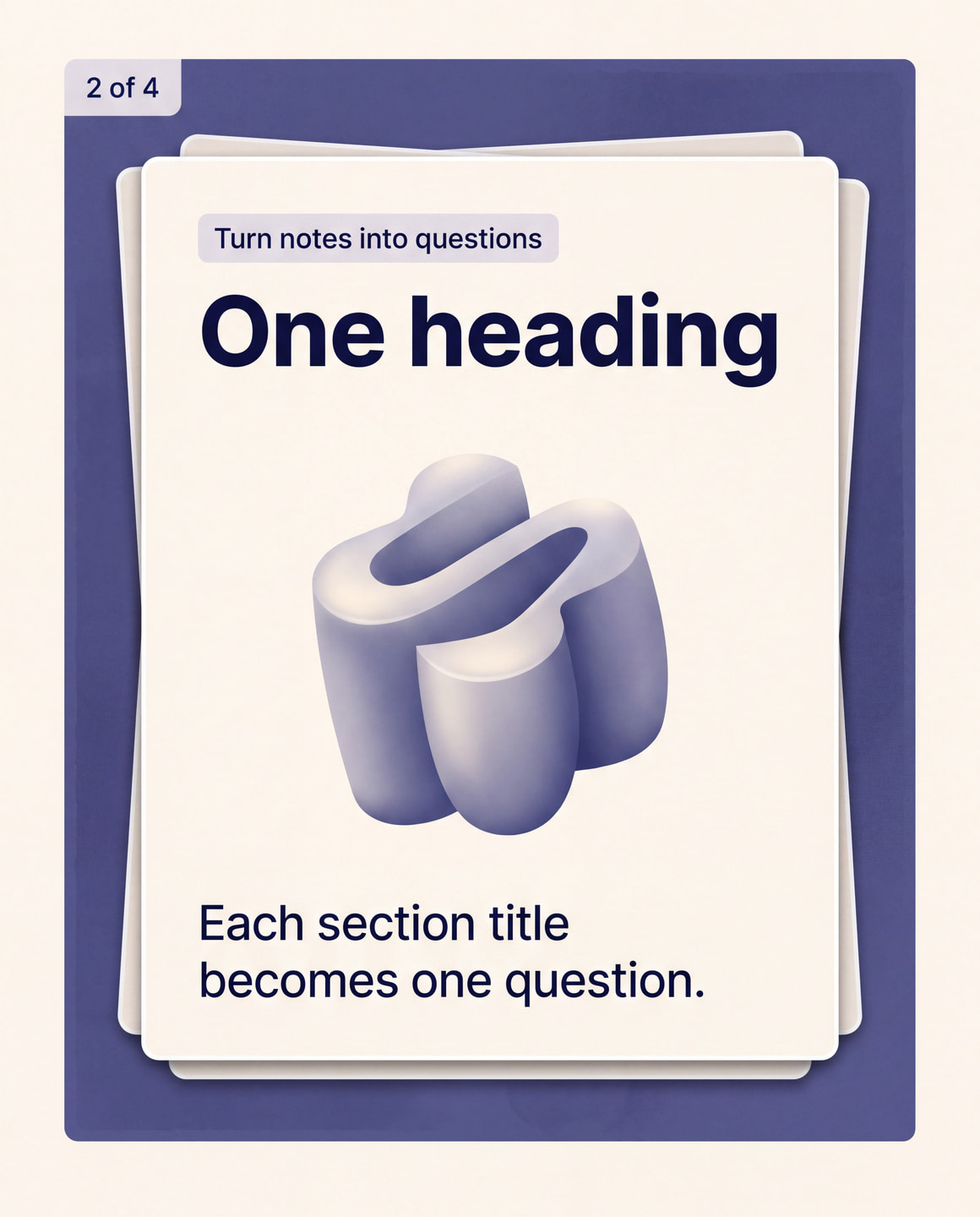
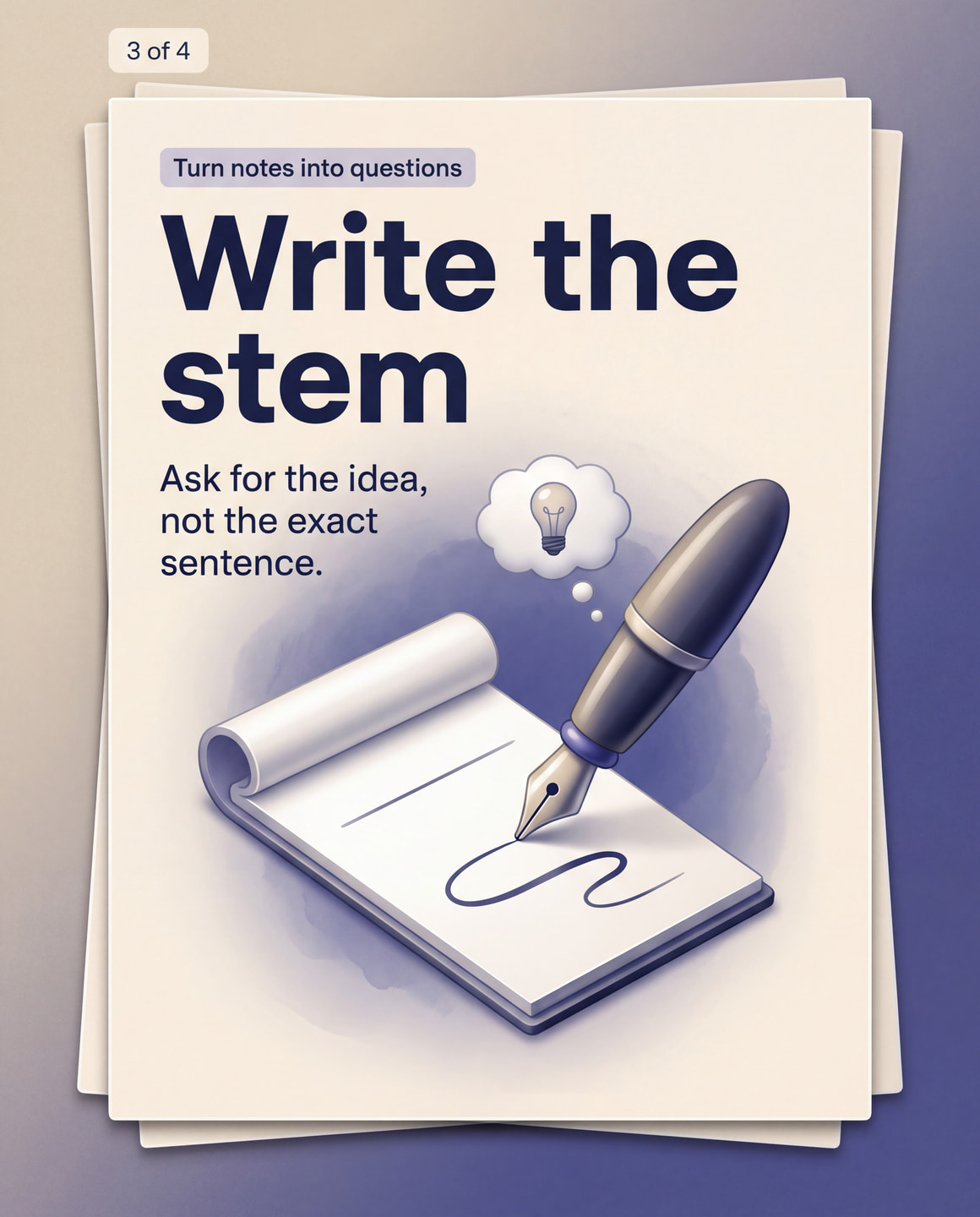
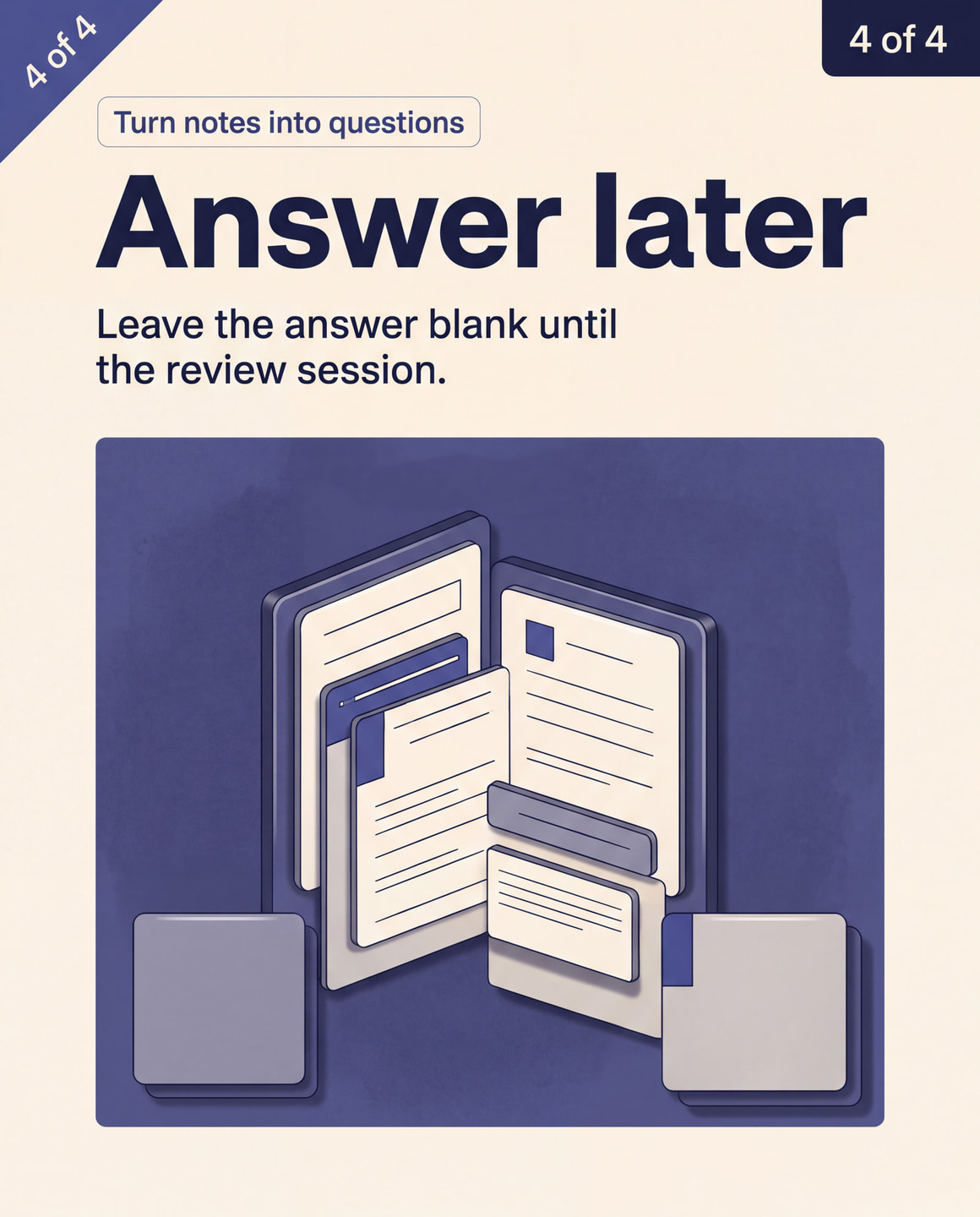
What if the question is the study method—and answering it too soon throws the practice away? Swipe through. If you turn notes into questions and fill the answers right away, you skip the retrieval those questions were meant to set up. Try this instead: 1. One heading — each section title becomes one question. 2. Write the stem — ask for the idea, not the exact sentence. 3. Answer later — leave the answer blank until the review session. Quizflex turns notes and PDFs into quizzes so you can practice those question…

Requirements:
- 10–12 questions mixing multiple-choice and short answer
- Focus on understanding, application, and common misconceptions — not copying exact phrases
- Include brief explanations for tricky items
- Suitable for self-review after reading the post
New here? Explore Quizflex AI — sign in, then paste at Dashboard → Create.
Topics covered
- Quizflex
- Infographic
- Study tips
- Studytips
- Activerecall
- Retrievalpractice
- Notetaking
- Studyskills
- Quizflexai
- Studytok
Frequently asked questions
What is Turn notes into questions?
How do I study Turn notes into questions effectively?
What is the best AI quiz tool for Turn notes into questions?
How can I practice Turn notes into questions with QuizFlex AI?
Is QuizFlex AI free for students and teachers?
Stay in the Loop
Get weekly tips on AI-powered learning, quiz strategies, and product updates. No spam, unsubscribe anytime.
From Text to Quiz: Transforming Study Materials Instantly with AI
Creating Accessible Quizzes: Best Practices with Quizflex for Truly Inclusive Learning
Related Articles
Continue learning with these related posts
The Forgetting Curve: How to Learn Smarter by Scheduling Your Reviews
Stop cramming and start retaining. Learn how the forgetting curve works and use spaced repetition to move knowledge into long-term memory for good.
Close the book first
Close the book first - concepts, study ideas, and practicing with Quizflex AI.
What if I told you your PDF could become a quiz in seconds?
What if I told you your PDF could become a quiz in seconds? How Quizflex AI helps you practice and remember.